




Lead(II) acetate: REACh registration completed
In the chemical laboratory, it is mostly used as a trihydrate, which forms colorless crystals: anhydrous lead(II) acetate. lead sugar in antiquity Lead(II) acetate is originally known as lead sugar. Until the 19th century it was used as a sugar substitute (defrutum) to sweeten wine – despite its toxicity. Even the ancient Romans used lead […]
Read more
In search of endogenous proteins
Johannes Broichhagenwww.broichhagenlab.com In his lectures, summarized in his book “What is Life?”, the physicist Erwin Schrödinger described in the 1940s that “the course of life processes in an organism […] [shows] an admirable regularity and order that in inanimate matter does not find its equal”.[1] Almost 80 years later, we are still searching for the […]
Read more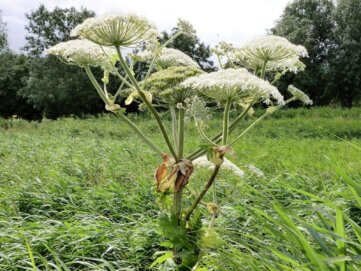
Medicinal plant of the month July: The hogweed
The poisonous hogweed is rampant again in Bavaria. It is mainly found in ditches, in forest areas and on the banks of streams. Wherever it grows, it also multiplies quite rapidly there, which is why it regularly puts conservation organizations on the alert. Hogweed: Absolutely avoid skin contact with the plant The plant species, brought […]
Read more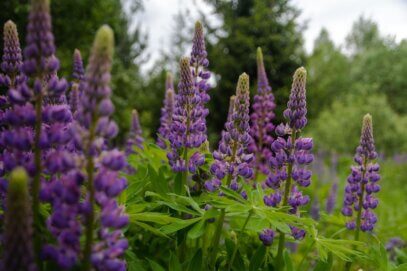
Lupins: vegetable protein source
Lupine seeds, which are particularly high in protein, have long been considered an alternative to soy. Slowly but surely, lupine products are conquering the food market – and not without reason. Already in ancient Egypt, around 2000 BC, the lupine was considered one of the most important foods next to grain. Even then, people knew […]
Read more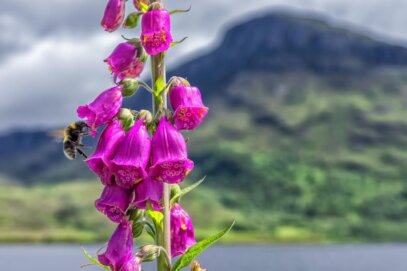
Plant of the Month June: Foxglove
The common foxglove, which belongs to the plantain family, is native to Central and Western Europe. Since it is also popular as a houseplant, it is also cultivated. As a biennial plant, it can grow to a remarkable height of up to two meters. The oval leaves of Digitalis purpurea are lance-shaped, the flowers are […]
Read more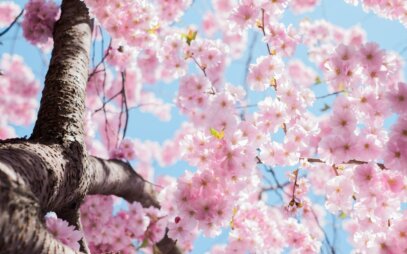
Cherry Blossom – May Plant of the Month
Medicinal Plant of the Month May: Cherry Blossom In May, many trees and shrubs delight every nature lover and gardener with their lush inflorescences. This also applies to the cherry tree, which shows its most beautiful blossoms in April and May. The cherry blossom not only looks breathtakingly beautiful, but also has a special meaning. […]
Read more
Chemistry in analogue photography
There is a lot of chemical and physical know-how behind the production of a photo. The basis for the development of black and white or color films is the photochemical conversion of white silver halides into black metallic silver. The color film is much more complex than a simple black and white film. However, both […]
Read more
Get ready to meet us
We look forward to meeting you personally at the following conferences: CPhI North America, May 17-19, 2022 BIO International Convention – Bavarian International Booth, June 13-16, 2022Cfm Oskar Tropitzsch-Booth # 4607-09 You can expect these topics: ADCs: 220 Potential Payloads, Linkers, Conjugation Services Contract Manufacturing Capacities – from niche to BULK Fermentation: Worldwide CDMO Services […]
Read more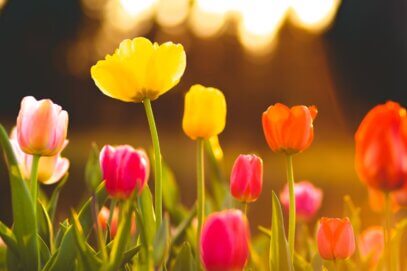
The Tulip – April Plant of the Month
Tulips (Tulipa) are the largest genus of bulbs in the lily family. There are around 150 different wild species in Central and Southern Europe, the Near East to Central Asia and North Africa. The garden tulip has been cultivated from several wild species in the Middle East. The only wild tulip that can be found […]
Read more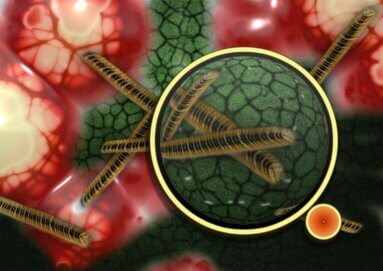
Daptomycin – a powerful weapon against multi-resistant germs
The antibiotic daptomycin is often considered the last weapon – it is supposed to help when other active ingredients fail due to resistant germs. Daptomycin was discovered and developed 30 years ago – but the mode of action was not 100 percent clear. In the meantime, scientists from the Universities of Bonn and Amsterdam have […]
Read more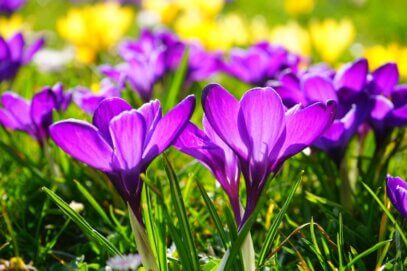
Crocuses – more than heralds of spring
No sooner has nature awakened from hibernation than the first specimens appear in parks and gardens and some species even add a few splashes of color in autumn: crocuses. The crocus genus (Crocus) belongs to the iris family (Iridaceae). The most widespread are varieties of spring crocus (Crocus vernus), large-flowered breeding hybrids of golden crocus […]
Read more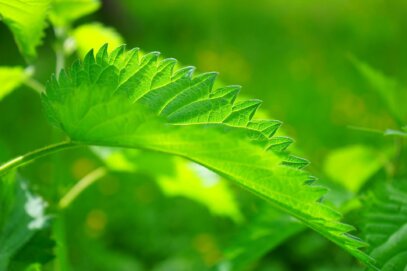
The Nettle as medicinal plant of the year 2022
Many gardeners fight them as weeds – but they can be used positively in many ways: the stinging nettle. It is one of the proven remedies in folk medicine. The stinging nettle species grow as annual or perennial herbaceous plants, sometimes as subshrubs. In Central Europe they can grow to a height of up to […]
Read more 4c media