



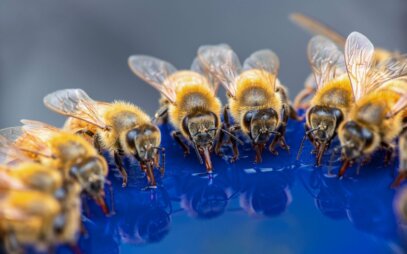
Active ingredient of the month February: Bee venom
For centuries, traditional medicine has used honeybee venom for its anti-inflammatory effects. Of central importance is the main ingredient melittin. Melittin: A hundred times stronger than cortisone The melittin from the venom of the honey bee has long been known for its strong effect in laboratory experiments. In case of inflammation, it has a hundred […]
Read more
Glycoalkaloids: Potatoes and tomatoes as potential drug suppliers against cancer
The solanine contained in potatoes is one of the glycoalkaloids (naturally occurring phytochemicals). Nightshade plants produce these substances to ward off pests and pathogens. The bioactive compounds can also be toxic to humans. However, researchers have now found that in therapeutic doses, they cause cancer cells to die and suppress the formation of metastases. According […]
Read more
Active ingredient of the month January: Sirolimus
Sirolimus, also known as rapamycin, is an immunosuppressant and mTOR inhibitor with a macrolide structure. It is a product of the streptomycete Streptomyces hygroscopicus. This species of bacteria was first isolated from the soil of the island of Rapa Nui. Active ingredient from Easter Island avoids restenosis in stents Sirolimus is indicated for: Prophylaxis of […]
Read more
mTOR inhibitor rapamycin (sirolimus) as a treatment option for tuberous sclerosis
Tuberous sclerosis is a very complex, incurable genetic disease. Within Germany, around 8,000 people are affected, and one to two million people worldwide. Tuberous sclerosis affects almost all organs. It leads, for example, to benign tumors or malformations in the brain. In addition, renal angiomyolipomas often form. These are also benign tumors of the kidney […]
Read more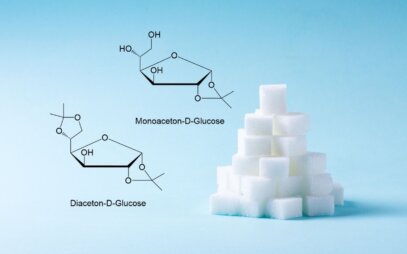
Sugars: from food industry to drug manufacturing
When it comes to sugar, people first think of its function as an energy supplier and sweetener in food or, in a negative context, of the common disease diabetes mellitus. But sugar is more than an energy supplier and nobody can live without it. Most probably only a minority is thinking of a group of […]
Read more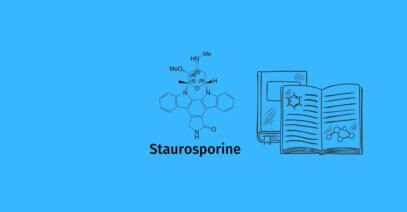
Staurosporine – antihypertensive, antifungal, antitumor
Staurosporine is a natural product that was isolated in 1977 from the bacterium Stepromyces staurosporeus. It is among the first of over 50 alkaloids isolated with this type of bisindole chemical structure [1,2]. Shortly after its discovery, various of its biological activities were demonstrated, which are still the subject of current research. Among other things, […]
Read more
In search of endogenous proteins
Johannes Broichhagenwww.broichhagenlab.com In his lectures, summarized in his book “What is Life?”, the physicist Erwin Schrödinger described in the 1940s that “the course of life processes in an organism […] [shows] an admirable regularity and order that in inanimate matter does not find its equal”.[1] Almost 80 years later, we are still searching for the […]
Read more
Plant of the Month June: Foxglove
The common foxglove, which belongs to the plantain family, is native to Central and Western Europe. Since it is also popular as a houseplant, it is also cultivated. As a biennial plant, it can grow to a remarkable height of up to two meters. The oval leaves of Digitalis purpurea are lance-shaped, the flowers are […]
Read more
Daptomycin – a powerful weapon against multi-resistant germs
The antibiotic daptomycin is often considered the last weapon – it is supposed to help when other active ingredients fail due to resistant germs. Daptomycin was discovered and developed 30 years ago – but the mode of action was not 100 percent clear. In the meantime, scientists from the Universities of Bonn and Amsterdam have […]
Read more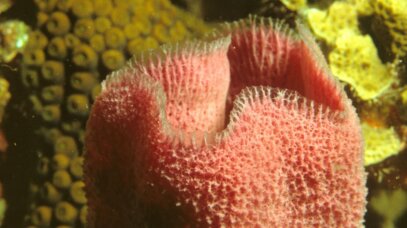
Avarol from sea sponges
Did you know that sea sponges produce drugs? Every day they protect themselves against their natural enemies with a multitude of active ingredients. Some of these substances, like Avarol, are already used successfully against viral diseases or cancer. Researchers are now trying to breed the sea sponges in order to obtain larger quantities of the […]
Read more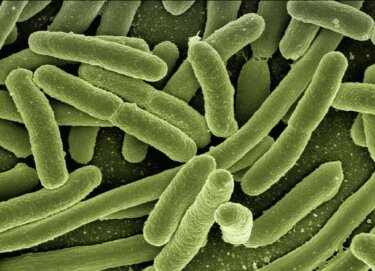
IPTG (Isopropyl-β-d-thiogalactopyranosid) – Use in Molecular Biology
The synthetic carbohydrate isopropyl-β-D-thiogalactopyranoside (IPTG) is the isopropylthioglycoside of D-galactose. This reagent is particularly widespread in recombinant protein expression. This substance is often used in molecular biology. IPTG – important for the lactose metabolism of Escherichia coli This lac operon plays an important role in the lactose metabolism of various enteric bacteria, such as Escherichia […]
Read more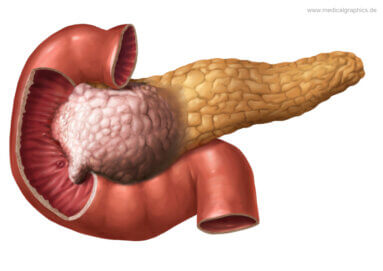
Verrucarin A in cancer therapy
Pancreatic cancer (ductal pancreatic adenocarcinoma / PDA) is one of the most difficult cancers to treat. Common chemotherapeutic agents often only bring about a short-term improvement in symptoms and, unfortunately, experience has shown that they have little effect on the patient’s recovery. New types of therapy are urgently needed here. This is where Verrucarin A […]
Read more 4c media